
Feb 1, 2017 | 01 Podcasts, Jeremiah
We live in a world of a million conflicting voices today. You can be constantly updated with tweets, texts, alerts and notifications. Which voice has authority? Which voice can be trusted? In Jeremiah 23:9-33, God addresses this issue of these different voices, criticizing those prophets who claim to speak for Him, but really don’t. In 23:1-8, the Lord called out Judah ’s political leaders; in this section He calls out her spiritual leaders.

Jan 25, 2017 | 01 Podcasts, Jeremiah
Today’s leaders promise hope and change only to deliver corruption and scandal. We elect bright promising outsiders who go to Washington and immediately become insiders. They cease fighting for the ideals they promised in the campaign and start fighting to keep themselves in power. Who can make things right? Who will help us out of this mess?
Jan 18, 2017 | 01 Podcasts, Samuel
With Absalom dead, Joab blows the trumpet to end the battles and the civil war is over. Except David is still in exile. Now we have a guilty nation and a vindicated king, and the question that remains is how to restore the relationship. How do you approach your king after you’ve been sinful or rebellious?

Jan 15, 2017 | 03 Series, Download, Old Testament, Study Guide
A 16-week Bible study podcast on selected passages from the Old Testament book of Jeremiah. What do you do when the world falls apart? Jeremiah has the answers.

Jan 11, 2017 | 01 Podcasts, Samuel
2 Samuel 18 is the climatic battle for the throne. But instead of highlighting the ferocity of the battle, the spotlight focuses on David’s anxiety over his son, and how the news of Absalom’s death impacts him, especially when he learns that the price of rebellion is the death of his son. It is a price David cannot bear to pay, but it is a price God pays for us. David’s grief gives us a glimpse of the price our heavenly father was willing to pay on our behalf.

Jan 4, 2017 | 01 Podcasts, Samuel
As we’ve studied the rebellion of Absalom, we’ve been asking what we can learn about responding when we sin, understanding the discipline of our heavenly father, and how to respond when suffering unjustly. With 2 Samuel 17 we focus on these questions from God’s perspective.

Dec 28, 2016 | 02 Library, Resources by Book, Samuel
Study questions, maps, charts, key words, history, background, outlines, and links to help you study the Old Testament books of 1&2 Samuel

Dec 21, 2016 | 01 Podcasts, Samuel
How should you respond when suffering unjustly? As David flees Jerusalem, he is used and abused by two members of Saul’s family. We can learn from his example how to bear unjust suffering.

Dec 14, 2016 | 01 Podcasts, Samuel
What do you do when you fail in a big way and your failure matters? Your mistake has big consequences for other people? How should you respond? That’s the situation David is facing in our story today.
Dec 10, 2016 | 02 Library, Chart, Charts OT, Download
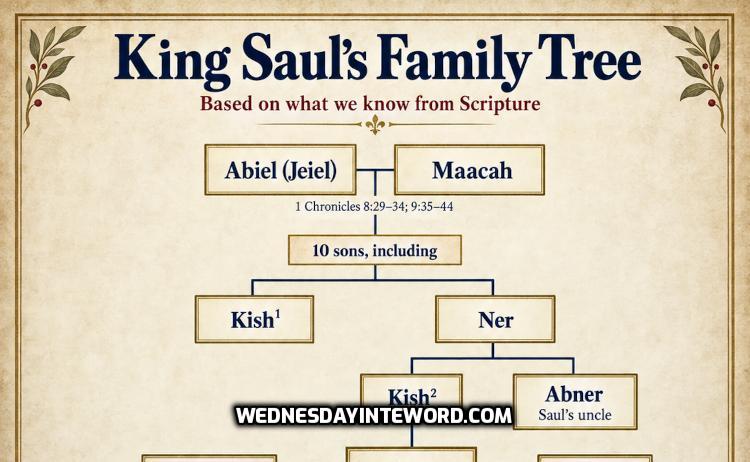
Explore King Saul’s family tree, including Jonathan, Michal, Ish-bosheth, Abner, Rizpah, and the two men named Mephibosheth. Includes a free printable chart.
Dec 7, 2016 | 01 Podcasts, Samuel
The conflict between appearance and reality is the theme of our story today. As we’ll see, what appears to be wisdom and repentance is not.

Dec 4, 2016 | 04 Bible Study 101, Genre
Narratives are true stories. Over 40% of the Old Testament Scriptures are narratives. Generally, the purpose of a biblical narrative is to show the Lord at work in His creation. Every genre found in the Bible presents unique challenges for understanding. Narratives are no exception. With narratives we think in scenes, plot and character, rather than paragraphs and outlines.
 Krisan Marotta is a Bible teacher and host of Wednesday in the Word, the podcast about what the Bible means and how we know.