Learn the marks of false teachers with classic and modern checklists from J.C. Ryle, Tim Challies, and Colin Smith to discern truth and avoid deception.

7 Key Marks of False Teachers
read more

Latest Blog Posts from Wednesday in the Word, the podcast about what the Bible means and how we know.
Learn the marks of false teachers with classic and modern checklists from J.C. Ryle, Tim Challies, and Colin Smith to discern truth and avoid deception.

I suspect many of believers today are convinced that Sabbath still means something but have no idea what it is. You take the Bible seriously, you sincerely want to follow and obey God, but in this particular instance you have no idea how to begin, what to do or what not to do. What can we learn from Jeremiah about Sabbath?

What do you do when you sin repeatedly? What do you do when you see something about yourself that you decide to change, you give it your best effort, and you don’t change? What’s wrong with us? Jeremiah gives 3 metaphors to explain the problem of our hearts.

Religion should make a difference in our lives. By “religion,” I mean the set of outward behavior, practices, ethics and rituals that we do or avoid doing to mark ourselves as believers. Believing in God means we ought to love and value what God loves and values, and therefore we ought not to be nicer to each other. Yet, religion doesn’t seem to solve all the problems we think it ought to solve. What is wrong with religion? Why doesn’t it make more difference?

Reading through the psalms can change your life! Here’s a plan to read through the psalms in 30 days.

Why is God so difficult to believe in? We want control. We explain away His gifts and provision. We want a predictable god who doesn’t surprise us. The God of Scripture is complicated and does not answer all our questions. We are afraid the hope of the gospel is too good to be true. The truth is that God is really not hard to believe in. The problem is that it is our hearts that are fickle.

Jeremiah Answers: What does God want from us? Faithfulness. Calling begins with God, develops through our relationship with God and that relationship leads us to others.

The book of Jeremiah is about global national and political crisis, personal crisis and most importantly, the word of the Lord.

Master Bible observation by learning what to notice in each passage and why it matters. How to Observe Scripture: 10 Things to Watch For

Jeremiah Bible Study Resources: Tools and resources to kick start your study of the Old Testament book of Jeremiah from WednesdayintheWord.com

The prevailing belief of the world is that “You go around once and then you die.” Yet, the remarkable claim of the Christian faith is that those who have died are more alive today than they were before their deaths. “If I die and go to heaven, what is it going to be like?” “Someone close to me died, where do I turn for comfort?” “If I die, will I go to a better place?” Professor Ken Elzinga answers these questions.

Jeremiah was a prophet to the southern kingdom of Judah who wrote the book of Jeremiah. His name means “exaltation of the Lord.” Below is a basic chronology of his 40+ year ministry.

Studying biblical prophecy is an often overwhelming task. Much of it is written in Hebrew poetry. The names and places are foreign, and the metaphors don’t always resonate with our modern ears. Yet we can usually understand the main point. If studying an Old Testament prophet overwhelms you, here are some tips to get you started.
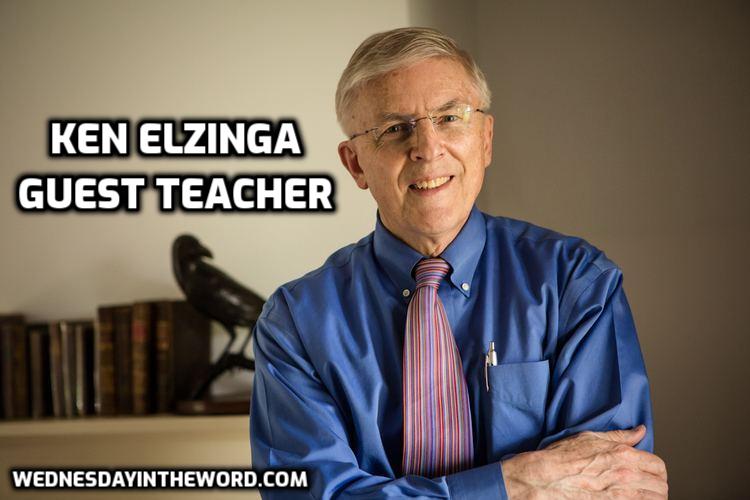
The talks in this collection were given by one of my role models Ken Elzinga to various audiences over several years. Professor Elzinga is a famous economist and the Robert C. Taylor Professor of Economics at the University of Virginia. He is also a very wise man.

Meeting God in the Psalms: How to take what you learned and transformed it into a talk that will change someone’s life.

Lecture notes for Psalm 107 The Lord delivers us from manifold troubles

Lecture notes for Psalm 109 which is used by Peter to describe Judas in Acts 2:16-20: “the Scriptures had to be fulfilled, which the Holy Spirit foretold by the mouth of David concerning Judas”

Lecture Notes for Psalm 49

Psalm 73 The end of the wicked contrasted with the end of the righteous.

Living the Psalms: Learn how to apply the wisdom of the psalms to your life today as you study them with greater detail.

How to study and understand the psalms plus examples of specific psalms.

A practical guide to sharing the psalms: choose passages, frame the context, ask great questions, and point people to hope in Christ.

Discover a practical teaching note format that helps Bible teachers teach with more clarity. Templates and tips inside.

About this series: Many years ago, we asked the matriarchs in our church to share “pearls of wisdom” they learned over the course of their walk with the Lord. We collected their stories in a booklet which we distributed through the women’s ministries. My copy of the booklet is now tattered and faded, and many of the women quoted are home with the Lord. To keep their words alive and honor their wisdom, I am sharing their pearls here before my booklet turns to dust. I hope these words inspire you to share a cup of tea with an older woman in your church and listen to her pearls of wisdom.

Many years ago, we asked the matriarchs in our church to share “pearls of wisdom” they learned over the course of their walk with the Lord. We collected their stories in a booklet which we distributed through the women’s ministries. My copy of the booklet is now tattered and faded, and many of the women quoted are home with the Lord. To keep their words alive and honor their wisdom, I am sharing their pearls here before my booklet turns to dust. I hope these words inspire you to share a cup of tea with an older woman in your church and listen to her pearls of wisdom.

How to study the Psalms: understand Hebrew poetry and parallelism, follow structure, and apply wisdom with confidence.

Many years ago, we asked the matriarchs in our church to share “pearls of wisdom” they learned over the course of their walk with the Lord. We collected their stories in a booklet which we distributed through the women’s ministries. My copy of the booklet is now tattered and faded, and many of the women quoted are home with the Lord. To keep their words alive and honor their wisdom, I am sharing their pearls here before my booklet turns to dust. I hope these words inspire you to share a cup of tea with an older woman in your church and listen to her pearls of wisdom.

About this series: Many years ago, we asked the matriarchs in our church to share "pearls of wisdom" they learned over the course of their walk with the Lord. We collected their stories in a booklet which we distributed through women's ministries. My copy of the...

Many years ago, we asked the matriarchs in our church to share “pearls of wisdom” they learned over the course of their walk with the Lord. We collected their stories in a booklet which we distributed through the women’s ministries. My copy of the booklet is now tattered and faded, and many of the women quoted are home with the Lord. To keep their words alive and honor their wisdom, I am sharing their pearls here before my booklet turns to dust. I hope these words inspire you to share a cup of tea with an older woman in your church and listen to her pearls of wisdom.

How are we to understand these various Scripture verses that encourage us to persevere in prayer, continue to pray, pray without ceasing, and pray at all times. Can we fulfill them by setting an app on our smart phones to remind us to pray 15 minutes of every hour? If not number of minutes, what are the authors asking us to do?

In this series of exhortations, Paul explains how belief in the gospel changes how you act in three pairs of relationships: wives/husbands, children/parents and slaves/masters. The overarching theme in this section is to live all our relationships as bond servants of the Lord Jesus Christ, knowing ultimately we serve him. The challenge is to resist the tendency to “win.” Instead we are to recognize God has a higher prior claim on our lives and seek to do all in the name of the Lord Jesus Christ — in whatever situation we find ourselves.

As a ministry leader, you often do surveys. But what questions should ask? Which questions solicit the best input? After 30 years in ministry — and countless surveys! — these are the questions I’ve found most helpful.

Paul has been warning the Colossians that they are in danger of becoming like the Pharisee in the parable of the Pharisee and the Tax Collector (Luke 18). Essentially, he warns: Don’t trust in your law-keeping; trust in the blood of Christ and the hope of the gospel. Then you’ll see real gospel change.

The point of Christianity is NOT how do I make this world a better place. The point is where am I going to spend eternity and how do I know?

Paul contrasts faith in Christ with keeping a set of religious disciplines. He claims limiting what you eat or practicing specific rituals as an effort to prove yourself a spiritual person or show yourself worthy to God is foolishness. It misses what Christ came to do for you.

As a ministry leader you probably make a lot of coffee. I’ve found using the Toddy Coffee system is the easiest way to make the most coffee with the least amount of mess, fuss and clean up. Here’s how.