Blog

Latest Blog Posts from Wednesday in the Word, the podcast about what the Bible means and how we know.

How to Approach Your King After You Failed

07 How to Approach Your King After You Failed (2 Samuel 19)

With Absalom dead, Joab blows the trumpet to end the battles and the civil war is over. Except David is still in exile. Now we have a guilty nation and a vindicated king, and the question that remains is how to restore the relationship. How do you approach your king after you’ve been sinful or rebellious?

read more...
Jeremiah - Bible study from Wednesday in the Word

Questions Jeremiah Answered

A 16-week Bible study podcast on selected passages from the Old Testament book of Jeremiah. What do you do when the world falls apart? Jeremiah has the answers.

read more...
The Price of Rebellion: A Son Hung on a Tree

06 The Price of Rebellion: A Son Hung on a Tree (2 Samuel 18)

2 Samuel 18 is the climatic battle for the throne. But instead of highlighting the ferocity of the battle, the spotlight focuses on David’s anxiety over his son, and how the news of Absalom’s death impacts him, especially when he learns that the price of rebellion is the death of his son. It is a price David cannot bear to pay, but it is a price God pays for us. David’s grief gives us a glimpse of the price our heavenly father was willing to pay on our behalf.

read more...
When God’s Plan isn’t Obvious

05 When God’s Plan isn’t Obvious (2 Samuel 17)

As we’ve studied the rebellion of Absalom, we’ve been asking what we can learn about responding when we sin, understanding the discipline of our heavenly father, and how to respond when suffering unjustly. With 2 Samuel 17 we focus on these questions from God’s perspective.

read more...
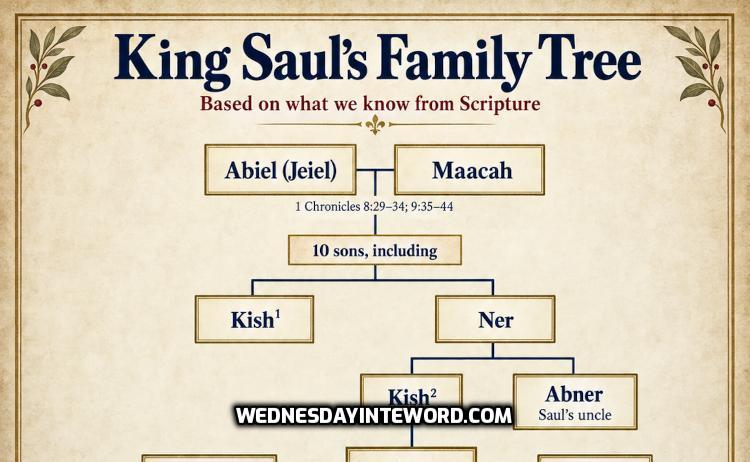
King Saul's Family Tree based on Scripture

King Saul’s Family Tree

Explore King Saul’s family tree, including Jonathan, Michal, Ish-bosheth, Abner, Rizpah, and the two men named Mephibosheth. Includes a free printable chart.

read more...

Understanding Narratives

Understanding Narratives

Narratives are true stories. Over 40% of the Old Testament Scriptures are narratives. Generally, the purpose of a biblical narrative is to show the Lord at work in His creation. Every genre found in the Bible presents unique challenges for understanding. Narratives are no exception. With narratives we think in scenes, plot and character, rather than paragraphs and outlines.

read more...
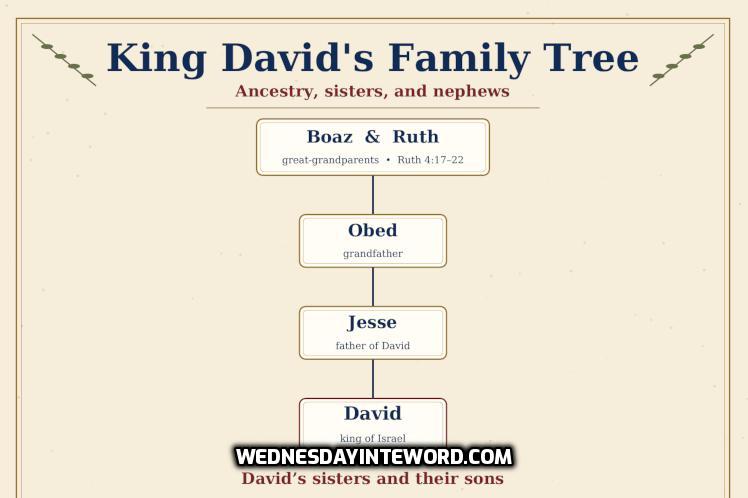
Family tree of King David showing his ancestors, siblings, wives, children, nephews, and the royal line through Solomon.”

King David’s Family Tree

Explore King David’s family tree, including his ancestors, siblings, wives, sons, daughters, and nephews. Learn why Samuel and Chronicles sometimes give different names, and download a free printable chart.

read more...
Galatians Bible Study Resources

Galatians Bible Study Resources

Study questions, maps, charts, key words, history, background, outlines, and links to help you study Paul’s Epistle to the Galatians. In his letter to the Galatians, Paul argues that there is one voice to listen to above all others and that is the voice that speaks the gospel of Jesus Christ.

read more...
7 Key Marks of False Teachers

7 Key Marks of False Teachers

Learn the marks of false teachers with classic and modern checklists from J.C. Ryle, Tim Challies, and Colin Smith to discern truth and avoid deception.

read more...
06 Why Does God Care If I Take a Break? (Jeremiah 17:19-27)

06 Why Does God Care If I Take a Break? (Jeremiah 17:19-27)

I suspect many of believers today are convinced that Sabbath still means something but have no idea what it is. You take the Bible seriously, you sincerely want to follow and obey God, but in this particular instance you have no idea how to begin, what to do or what not to do. What can we learn from Jeremiah about Sabbath?

read more...
05 What is Wrong With Me? (Jeremiah 17:1-11)

05 What is Wrong With Me? (Jeremiah 17:1-11)

What do you do when you sin repeatedly? What do you do when you see something about yourself that you decide to change, you give it your best effort, and you don’t change? What’s wrong with us? Jeremiah gives 3 metaphors to explain the problem of our hearts.

read more...
04 What is Wrong With Religion? (Jeremiah 7:1-15)

04 What is Wrong With Religion? (Jeremiah 7:1-15)

Religion should make a difference in our lives. By “religion,” I mean the set of outward behavior, practices, ethics and rituals that we do or avoid doing to mark ourselves as believers. Believing in God means we ought to love and value what God loves and values, and therefore we ought not to be nicer to each other. Yet, religion doesn’t seem to solve all the problems we think it ought to solve. What is wrong with religion? Why doesn’t it make more difference?

read more...
03 Why is God so Difficult to Believe in? (Jeremiah 2:1-13)

03 Why is God so Difficult to Believe in? (Jeremiah 2:1-13)

Why is God so difficult to believe in? We want control. We explain away His gifts and provision. We want a predictable god who doesn’t surprise us. The God of Scripture is complicated and does not answer all our questions. We are afraid the hope of the gospel is too good to be true. The truth is that God is really not hard to believe in. The problem is that it is our hearts that are fickle.

read more...
Heaven and Those Who have Gone Before Us

Heaven and Those Who have Gone Before Us

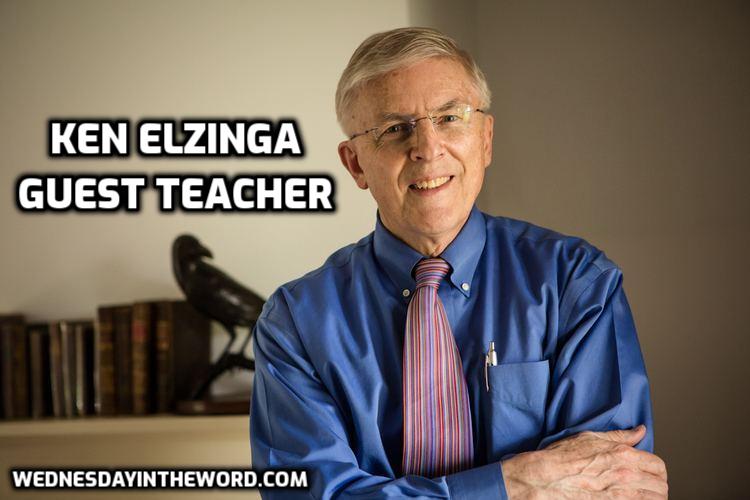
The prevailing belief of the world is that “You go around once and then you die.” Yet, the remarkable claim of the Christian faith is that those who have died are more alive today than they were before their deaths. “If I die and go to heaven, what is it going to be like?” “Someone close to me died, where do I turn for comfort?” “If I die, will I go to a better place?” Professor Ken Elzinga answers these questions.

read more...
Jeremiah’s Ministry Chronology

Jeremiah’s Ministry Chronology

Jeremiah was a prophet to the southern kingdom of Judah who wrote the book of Jeremiah. His name means “exaltation of the Lord.” Below is a basic chronology of his 40+ year ministry.

read more...
Understanding Prophecy | WednesdayintheWord.com

Understanding Prophecy

Studying biblical prophecy is an often overwhelming task. Much of it is written in Hebrew poetry. The names and places are foreign, and the metaphors don’t always resonate with our modern ears. Yet we can usually understand the main point. If studying an Old Testament prophet overwhelms you, here are some tips to get you started.

read more...
Ken Elzinga Guest Teacher | WednesdayintheWord.com

Guest Teacher: Ken Elzinga

The talks in this collection were given by one of my role models Ken Elzinga to various audiences over several years. Professor Elzinga is a famous economist and the Robert C. Taylor Professor of Economics at the University of Virginia. He is also a very wise man.

read more...