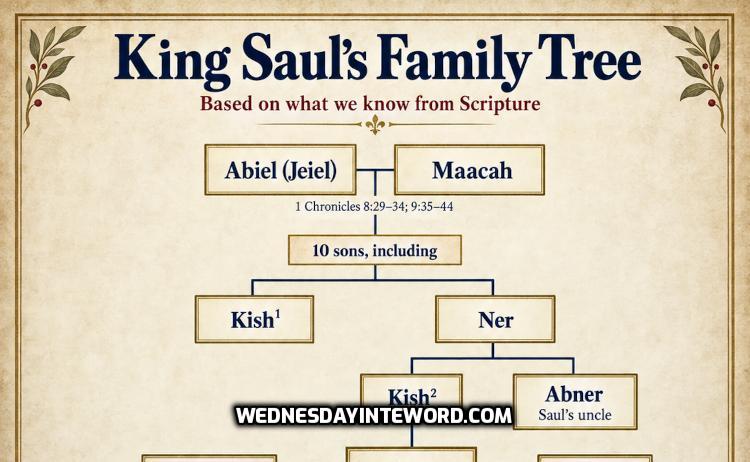
King Saul’s Family Tree
Explore King Saul’s family tree, including Jonathan, Michal, Ish-bosheth, Abner, Rizpah, and the two men named Mephibosheth. Includes a free printable chart.
Explore King Saul’s family tree, including Jonathan, Michal, Ish-bosheth, Abner, Rizpah, and the two men named Mephibosheth. Includes a free printable chart.
The conflict between appearance and reality is the theme of our story today. As we’ll see, what appears to be wisdom and repentance is not.

Narratives are true stories. Over 40% of the Old Testament Scriptures are narratives. Generally, the purpose of a biblical narrative is to show the Lord at work in His creation. Every genre found in the Bible presents unique challenges for understanding. Narratives are no exception. With narratives we think in scenes, plot and character, rather than paragraphs and outlines.

The sins of David’s sons repeat and magnify David’s sin. David’s crime was against the wife of a friend. Amnon sins against a sister. The consequences of the first were death of a husband and baby. The consequences of the second was civil war. But why do the consequences fall so heavily on Tamar?
A 7-week Bible study on the rebellion of David’s son, Absalom, from the Old Testament book of 2 Samuel.
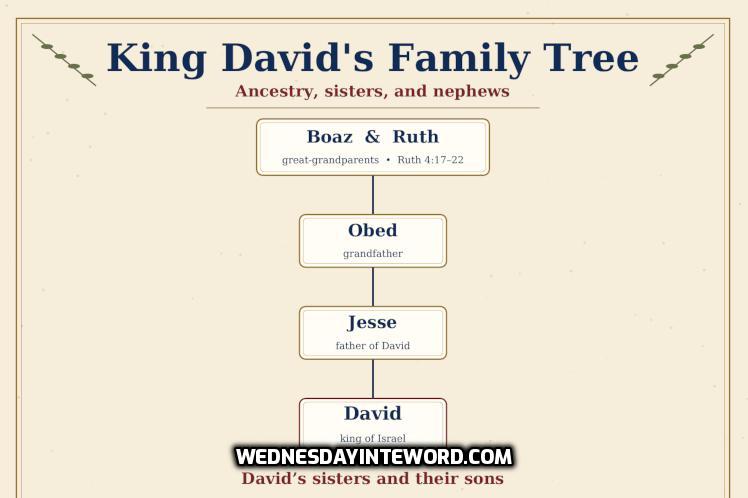
Explore King David’s family tree, including his ancestors, siblings, wives, sons, daughters, and nephews. Learn why Samuel and Chronicles sometimes give different names, and download a free printable chart.

Study questions, maps, charts, key words, history, background, outlines, and links to help you study Paul’s Epistle to the Galatians. In his letter to the Galatians, Paul argues that there is one voice to listen to above all others and that is the voice that speaks the gospel of Jesus Christ.

We all come to a place at one time or another where we ask the question, “Why is my life so hard? Why do I have to endure this particular problem or experience this pain or go through this situation?” In Jeremiah 20:7-19, we see Jeremiah reach that place. He hits rock bottom and cries out asking, why his life was so hard.

One of the most common complaints is that the God of the Bible doesn’t seem to be very “fair.” We come from different backgrounds, we have different accents and we have different gifts and opportunities. And we look at that and ask, “Is God fair?”

Learn the marks of false teachers with classic and modern checklists from J.C. Ryle, Tim Challies, and Colin Smith to discern truth and avoid deception.

I suspect many of believers today are convinced that Sabbath still means something but have no idea what it is. You take the Bible seriously, you sincerely want to follow and obey God, but in this particular instance you have no idea how to begin, what to do or what not to do. What can we learn from Jeremiah about Sabbath?

What do you do when you sin repeatedly? What do you do when you see something about yourself that you decide to change, you give it your best effort, and you don’t change? What’s wrong with us? Jeremiah gives 3 metaphors to explain the problem of our hearts.
 Krisan Marotta is a Bible teacher and host of Wednesday in the Word, the podcast about what the Bible means and how we know.